Driveways
A driveway that sheds water
is a driveway that lasts.
Most driveway problems come down to one thing: water. A drive without a proper crown pools water. Pooled water turns gravel into mud. Mud gets pushed around by tires. And six months later the whole thing is a washboard of ruts. We build drives that shed instead of hold.
New driveway installs
- Cut and shape the road bed
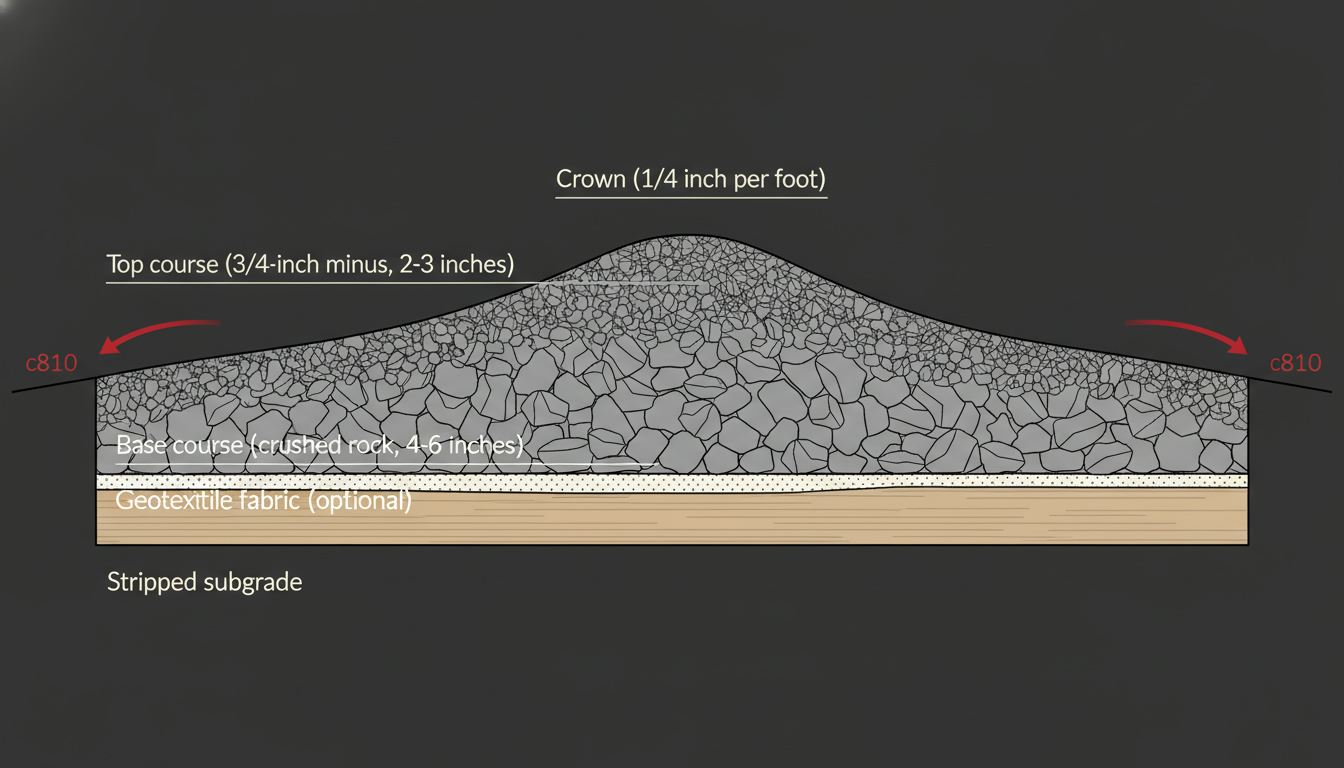
- Compact base and grade to a proper crown
- Install culverts where drainage crosses the drive
- Rock it with the right size gravel for the use
- Final roll and cleanup
Driveway rescue & regrade
For existing drives, we bring out the skid steer with the box grader, regrade the surface, crown it, fill the low spots with new rock where needed, and roll it. Jobs range from ½ day for a short drive to 1–2 days for a long one, and they usually come in between $950 and $3,200 depending on length and condition.
What makes a drive last
A proper crown. Rock sized right for the traffic. Culverts where water wants to cross. Roadside ditches that actually drain. We do all of it, and we don't skip steps to save a couple hundred bucks today at the cost of thousands next year.
Wondering what rock your quote means? Our rock and gravel size guide compares every size to a quarter.
For deeper context: how to maintain a gravel driveway in the Willamette Valley and why your driveway floods every winter.
Related
Drives need drainage.
Where We Work
Gravel driveway repair in Lebanon and across Linn County.
We install and repair gravel driveways in Lebanon, Albany, Corvallis, Salem, Sweet Home, Brownsville, Jefferson, Scio, Tangent, Halsey, Harrisburg, and the rural acreage between them. See the full service area for distances.
- LebanonHome base · Linn County
- Albany~13 mi NW · Linn County
- Corvallis~25 mi W · Benton County
- Salem~30 mi N · Marion County
- Sweet Home~14 mi E · Linn County
- Brownsville~12 mi S · Linn County
- Jefferson~17 mi N · Marion County
- Scio~16 mi NE · Linn County
- Tangent~15 mi W · Linn County
- Halsey~18 mi SW · Linn County
- Harrisburg~25 mi SW · Linn County
FAQ
Common questions about driveways.
What gravel do you use?
For most jobs, a 3-inch base of crushed rock with 3/4-inch minus on top. Rural drives sometimes get a heavier base. We size it to the soil and traffic, not just to a spec sheet.
How long should a gravel driveway last?
Built right and topped up every few years: 20+ years. Built wrong (no crown, no base, no drainage) it can wash out in a single winter.
Do I need a culvert?
If your drive crosses a roadside ditch or your driveway entrance pools water, yes. Linn County has specs for entrance culverts; we install to spec.
New driveway vs. rescue — when's it time to redo?
If the drive has lost crown, the gravel is mixed into mud, or potholes are returning within months — it's rescue time. If it's never been graded properly to begin with, a full reset is sometimes faster than chasing it for years.
How much does it cost to fix a washed-out gravel driveway in Oregon?
For a typical Linn County rural driveway in 2026: a half-day regrade with spot rock fill runs $950–$1,400 for short drives (under 200 ft). A full-day regrade on a longer drive with crowning, rock added where needed, and edge drainage relief runs $1,850–$2,800. Heavy washouts that need a full reset — re-cutting the road bed, fresh base course, new culvert — run $3,500–$7,500+ depending on length and the underlying cause. Walk-throughs are free.
How often should I top up my gravel driveway?
Most rural Willamette Valley drives need a fresh top-up of rock every 2–4 years and a full regrade every 8–12 years. Heavier traffic (commercial deliveries, multiple vehicles daily) shortens both intervals. Signs you've waited too long: ruts forming where tires track, pooling water in the same spots, gravel migrating off the crown to the edges.
Pothole repair vs. full regrade — which one do I actually need?
Spot repair works when the drive has a proper crown and base and only a few isolated potholes — we grade the bad spots, fill with matching rock, and roll them in. Full regrade makes sense when the crown is gone, gravel has mixed into mud, multiple potholes keep returning within months, or water pools in more than one place. Honest answer: if you've patched the same spot twice in two years, you're past spot repair — a full regrade pays off faster than chasing it.