Why your driveway floods every winter —
and how to fix it for good.
By Jeff Walters · April 28, 2026 · 8 min read
If your driveway turns into a small lake every November and stays that way through April, that's not the rain's fault — the valley got 40 inches a year before you bought the place. The problem is design: water has to go somewhere, and your driveway is currently telling it to stay. Here's what's actually wrong and the fixes that work.
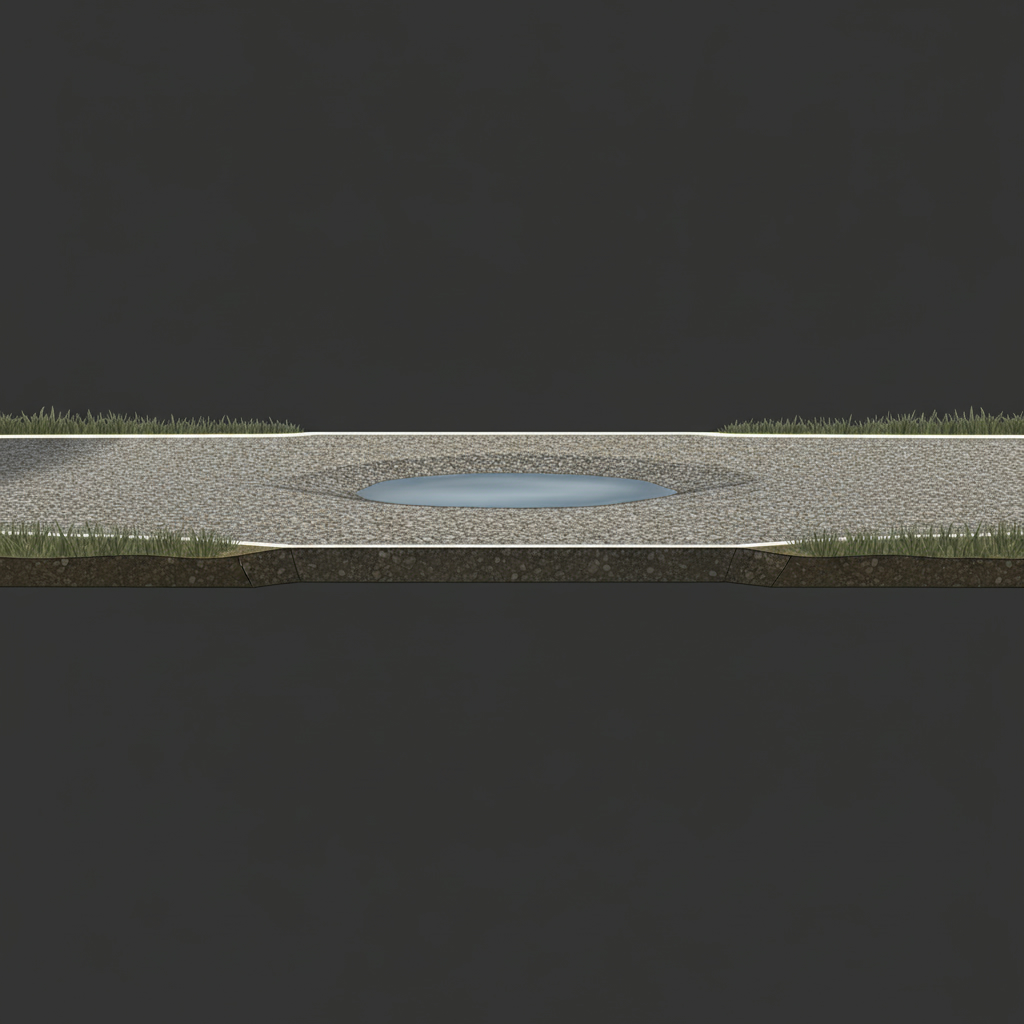
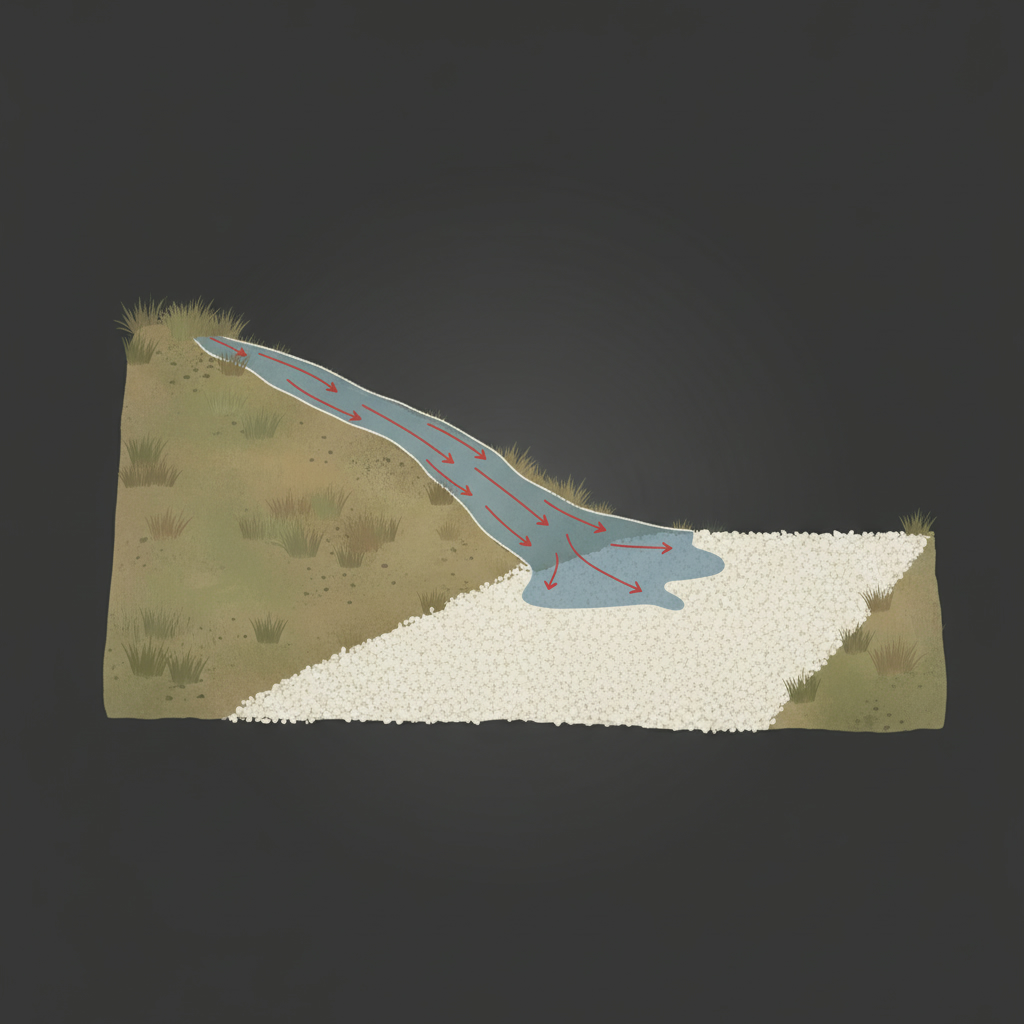
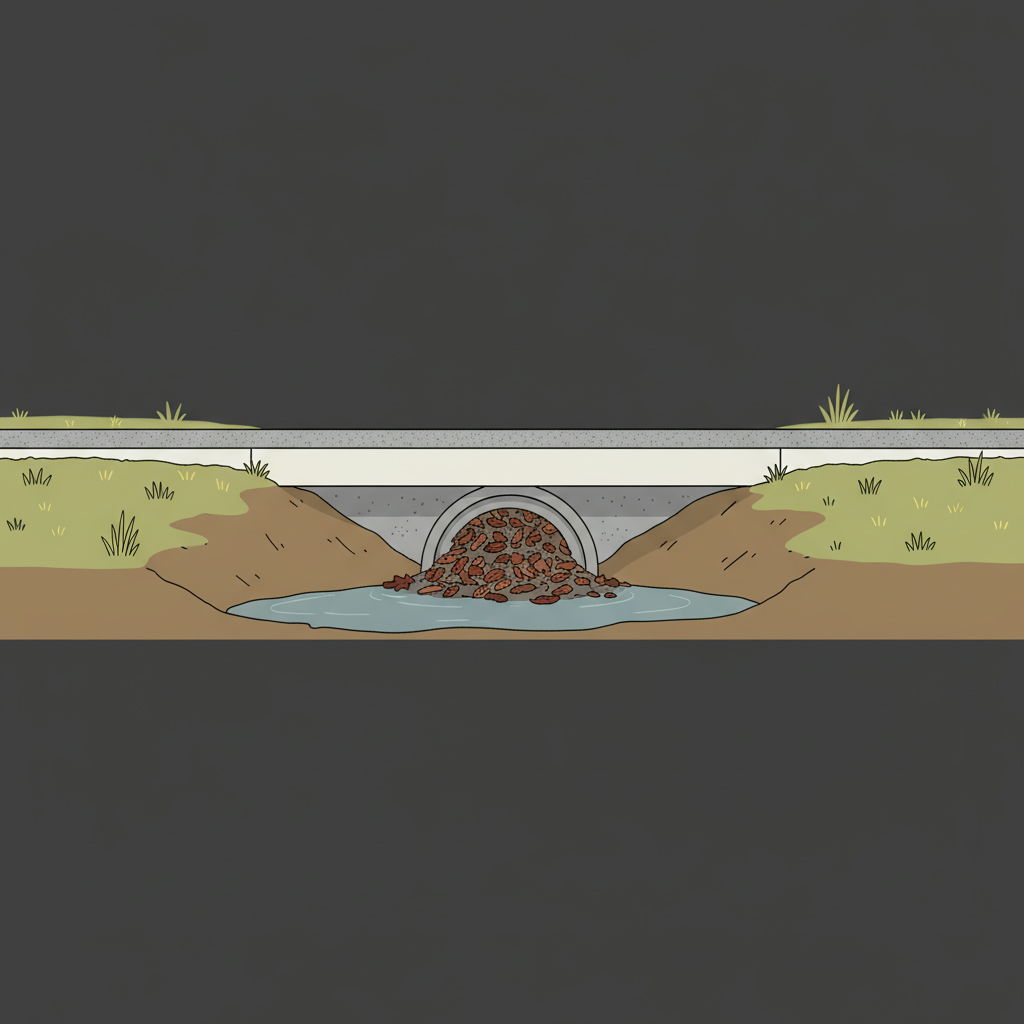
The three causes of driveway flooding. Most failures are at least one of these — often more than one.
Water doesn't pool by accident
Standing water on a gravel driveway in the Willamette Valley is always one of three things — sometimes all three at once:
- The driveway has no crown. Water that falls on a flat surface stays on a flat surface.
- Water from elsewhere is running onto the driveway. Roof runoff, slope drainage, road runoff — the drive is the lowest point in the local watershed.
- The driveway has no exit for water that gets on it. No ditch, no culvert, no daylight discharge. Once water arrives, there's nowhere for it to go.
Fixing flooding means addressing whichever of those is happening on your property — and usually more than one.
Diagnosis: where's the water coming from?
Before you fix anything, walk the property during or right after a storm. Watch where water actually moves. Surface flow tells you the truth in a way that satellite photos and standing-on-dry-ground inspection don't.
If the driveway itself is holding water
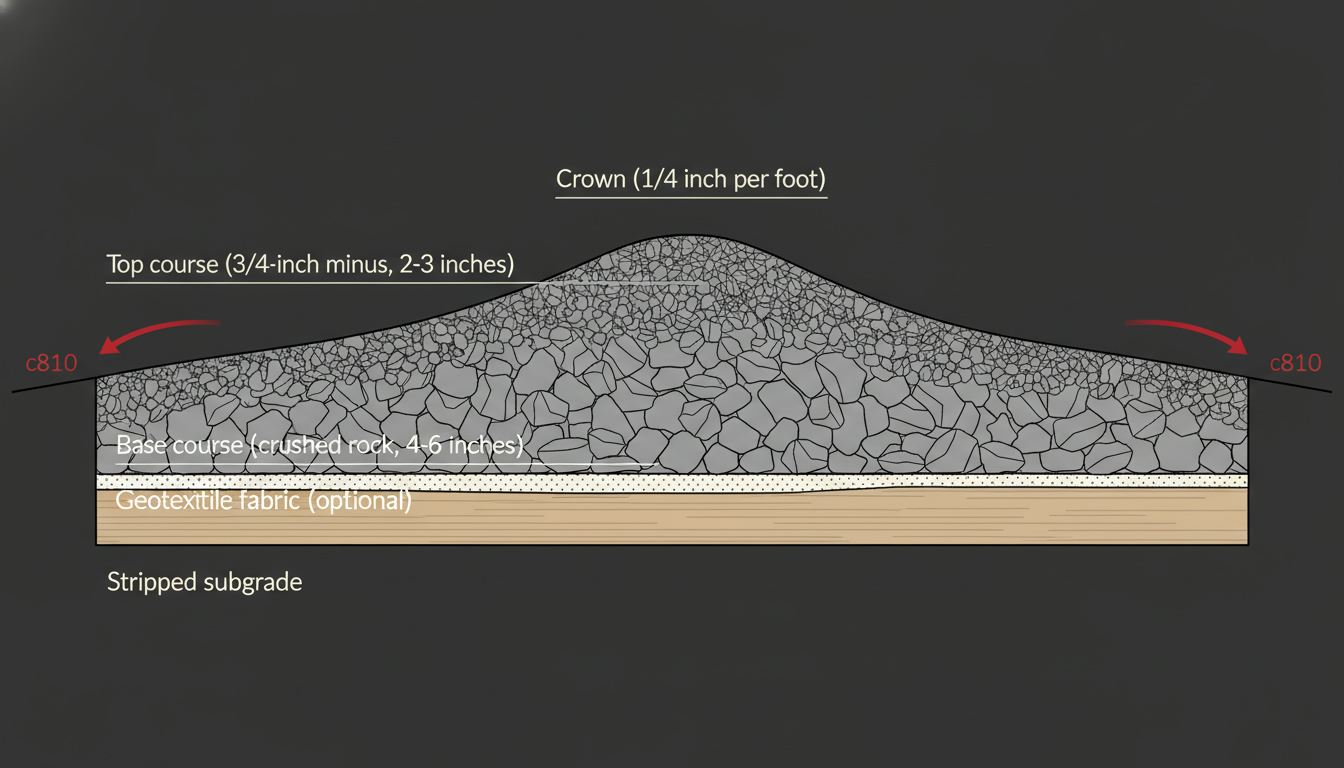
You'll see puddles in the middle of the drive that survive 24+ hours after rain stops. The problem is crown. Healthy gravel drives peak in the middle and shed water to both sides — about ¼ inch per foot of width. Flat or dished drives turn into ponds.
The fix: regrade the drive surface back to a proper crown, top up with fresh ¾-minus, and compact in lifts. See our full driveway maintenance guide for the long-form explanation. This alone fixes the majority of "my driveway floods" calls we get.
If water is running onto the drive from uphill
You'll see flow lines coming from the property uphill of the drive — across pasture, down a slope, off a roof, out of a swale. The driveway becomes the lowest path of least resistance and acts as a stream bed during storms.
The fix: intercept the water before it reaches the drive. Usually that means a swale or French drain running parallel to the upslope edge, daylighting somewhere downhill of the drive. The drive itself stops getting flooded once the upstream water has somewhere else to go.
If water arrives at the drive but can't leave
Most rural Willamette Valley driveways have a roadside ditch next to them — that's the public-road drainage. Where your driveway crosses the ditch, there should be a culvert (a large pipe under the drive) so water in the ditch flows past the driveway entrance instead of pooling there.
If there's no culvert, the ditch dead-ends at your drive entrance and floods. If there's a culvert but it's undersized or full of sediment and brush, same problem — water can't get past.
The fix: install a properly sized culvert (Linn County has specs for residential entrance culverts), or clean out and possibly upsize the existing one. This is one of the highest-leverage drainage fixes on rural valley properties — it solves a problem that affects every storm and isn't fixable with surface work alone.

If water is sitting in the driveway base and never draining
Sometimes the surface looks crowned and the ditch looks fine, but the drive is still soft and squishy through winter. The water you don't see is the water under the surface — sitting in saturated soil under the gravel, slowly turning the bed into mud.
The fix: sub-surface drainage. A curtain drain running along the uphill side of the drive, intercepting groundwater before it can saturate the bed under the gravel. Or, if the base has already failed, a full rescue: strip the soft material, install drainage fabric, lay fresh base, recrown. See the maintenance guide for what "rescue" looks like and when it's the right call.
The roof runoff factor
One sneaky cause we see often: roof runoff dumping onto or near the driveway. Houses without gutters, or gutters that discharge near the drive without proper extension or splash-blocks, are pouring concentrated water at the drive surface during every storm. Five seconds of math: a 1,500 sq ft roof in a 1-inch rain produces about 935 gallons of water. That all has to go somewhere. If it's dumping at the side of your drive, you've found a meaningful chunk of your problem.
Fixes range from cheap (gutter extensions, splash blocks, pop-up emitters) to permanent (downspout buried lines daylighting away from the drive). Most aren't dirt-work jobs — they're gutter contractor or homeowner work. But they're worth identifying when diagnosing a flooded drive.
The entrance is the kill zone
If you've owned the property a while, look at the entrance — where your drive meets the road. That spot does an outsized share of the flooding for two reasons:
- Road runoff often drains down driveway entrances if the driveway is at or below road grade.
- Where the drive meets the road, the surface usually has the least crown — drivers slow there, ruts form, and the entrance becomes a low spot.
Most rural valley flooding fixes start at the entrance: clean ditch, sized culvert, regraded entrance with proper crown, sometimes a small berm to deflect road runoff. Get the entrance right and a lot of further problems disappear.
What it costs to actually fix it
Real numbers for typical Linn County driveway flooding fixes:
- Regrade and recrown a drive losing surface integrity: $950–$3,200 depending on length.
- Install or replace a residential entrance culvert: $400–$1,200 including the pipe, depending on size and access.
- Cut a swale to redirect upslope water: $1,200–$2,800 depending on length and discharge complexity.
- Curtain drain for sub-surface water: $2,000–$5,000 depending on length and soil.
- Full driveway rescue (failing base, recrown, regrade, drainage): $3,500–$7,500 for a typical rural drive.
Most flooded-driveway fixes come in well under the cost of not fixing it — every winter the drive is flooded is another winter the base degrades, the gravel washes out, and the eventual rescue gets more expensive.
What you can do this weekend (no contractor)
Three things any property owner can do without hiring out:
- Clean the ditch. Pull out leaves, grass, and sediment from the roadside ditch where it crosses your driveway. Five minutes with a shovel can restore drainage that's been blocked for years.
- Clean the culvert. If you have one, look in both ends. Brush, leaves, sometimes a beaten-up coffee can — anything blocking the pipe means water can't pass. A long pole and persistence are usually all it takes.
- Walk during a storm. Watch where water actually goes. Take photos. The flow lines you observe become the diagnosis a contractor uses on the walk-through. You'll save quote time and probably money.
When to call
If you've cleaned the ditch and culvert, regrading hasn't fixed it, and the driveway still floods after every storm — the cause is structural, not maintenance. That's when a walk-through with a dirt-work contractor pays for itself: someone who's seen this on a hundred properties can usually identify the cause in the first ten minutes and tell you what the right fix actually is.
If your drive's giving you trouble, see our driveway service and drainage service pages, or call and we'll come walk it before the next storm makes things worse.
Related
More from the job site.
Gravel Driveway Maintenance
The full maintenance calendar — what to do when, how to keep a drive alive 20+ years.
ReadDrainage Service
French drains, swales, culverts — the upstream side of the fix.
Service detailsDriveway Service
Regrading, recrowning, rescue work for failing drives.
Service detailsTired of standing water?
Send a photo of the worst spot during the next storm. The diagnosis usually starts there.