Drainage Solutions in Lebanon, Oregon —
French Drains, Swales & Culverts
The Willamette Valley gets 40+ inches of rain a year. Properties that don't drain right suffer — soggy yards, wet crawlspaces, rotted siding, dead pasture. We fix that with swales, French drains, and smart grading.
Drainage
Diagnose.
Dig.
Daylight.
The first step in any drainage job is figuring out where the water actually comes from and where it needs to go. Most wet-spot problems aren't really "this spot" problems — they're "the whole lot pushes water here" problems. Fix it at the source and the symptom goes away.
What we build
- Swales. Shallow, shaped channels that move surface water around the property without needing a pipe.
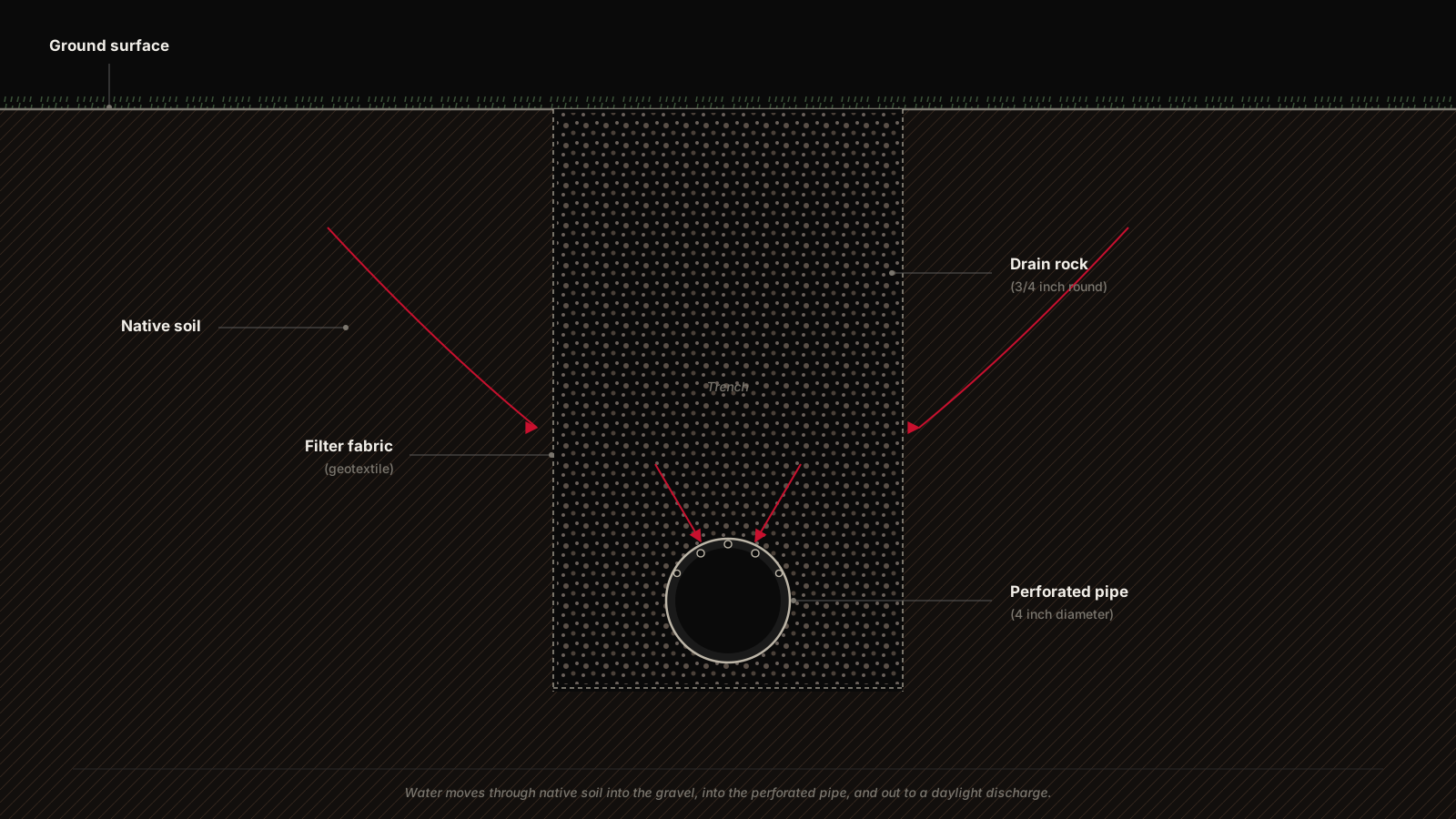
- French drains. Perforated pipe in gravel, wrapped in fabric, buried below the surface. Great for subsurface water.
- Curtain drains. Intercept water before it reaches the house, barn, or shop.
- Surface regrading. Sometimes the fix isn't a drain at all — it's shaping the ground so water runs away from the structure instead of toward it.
- Daylight discharges. Getting the water out to where it can't do any more damage.
- Culvert work. Driveway culverts, replacements, and sizing upgrades.
What to expect
Drainage jobs are usually 1–3 days for most properties. We'll show you the plan on the ground before we dig — flags, chalk lines, whatever it takes so you can picture it. When it's done, you'll see a dry surface where there used to be a wet one, and the first real rain confirms it.
For more on which drainage tool fits which problem, see our blog post on choosing between French drains, swales, ditches, and culverts.
Where We Work
Drainage in Lebanon and across Linn County.
We install French drains, swales, and culverts in Lebanon, Albany, Corvallis, Salem, Sweet Home, Brownsville, Jefferson, Scio, Tangent, Halsey, Harrisburg, and the rural acreage between them. See the full service area for distances.
- LebanonHome base · Linn County
- Albany~13 mi NW · Linn County
- Corvallis~25 mi W · Benton County
- Salem~30 mi N · Marion County
- Sweet Home~14 mi E · Linn County
- Brownsville~12 mi S · Linn County
- Jefferson~17 mi N · Marion County
- Scio~16 mi NE · Linn County
- Tangent~15 mi W · Linn County
- Halsey~18 mi SW · Linn County
- Harrisburg~25 mi SW · Linn County
FAQ
Common questions about drainage.
How do I know if I really have a drainage problem?
Standing water 24+ hours after rain. Soggy ground in summer. Water marks on siding or foundation. Dead lawn patches in low spots. The smell of a damp basement or crawlspace is a giveaway too.
Do French drains really work?
When installed correctly — yes. When the discharge is uphill of the source, when the gravel sock is missing, or when the trench dead-ends instead of daylighting, they fail in a year. Detail matters more than size.
Can you tie into my existing drainage?
Yes — if it's working. We'll camera or rod it before we tie in. If existing pipe is collapsed or back-graded, we tell you straight rather than adding to a failing system.
Swale vs. French drain — what's the difference?
A swale is a shallow grass channel that moves surface water. A French drain is a buried perforated pipe that captures groundwater. Different problems, different fixes — most properties need a bit of both.
Not sure which rock or fill to order? See our rock and gravel size guide, with every size compared to a quarter.