Firebreaks & Wildfire Fuel Reduction
in Lebanon, Oregon
Firebreaks and defensible-space clearing for rural properties in Linn County and the Willamette Valley. Heavy brush, blackberry, scotch broom, and ladder fuels — knocked down to bare ground around homes, outbuildings, and along property lines, before a fire season turns serious.
Firebreaks & Fuel Reduction
Wildfire prep,
done before fire season.
Western Oregon used to be the wet half of the state. The last several summers have changed that math. East-side wind events, dry springs, and decades of brush buildup mean a property that didn't need firebreak work in 2010 might need it now. Insurance carriers are starting to ask about it. ODF and local fire districts are recommending it. And neighbors who've watched what happens on the dry side of the Cascades are starting to act on it.
We cut firebreaks and reduce fuel loads with the same skid-steer brush cutter we use for land clearing — but with a different goal. Land clearing makes a lot usable. Firebreak work makes a lot defensible.
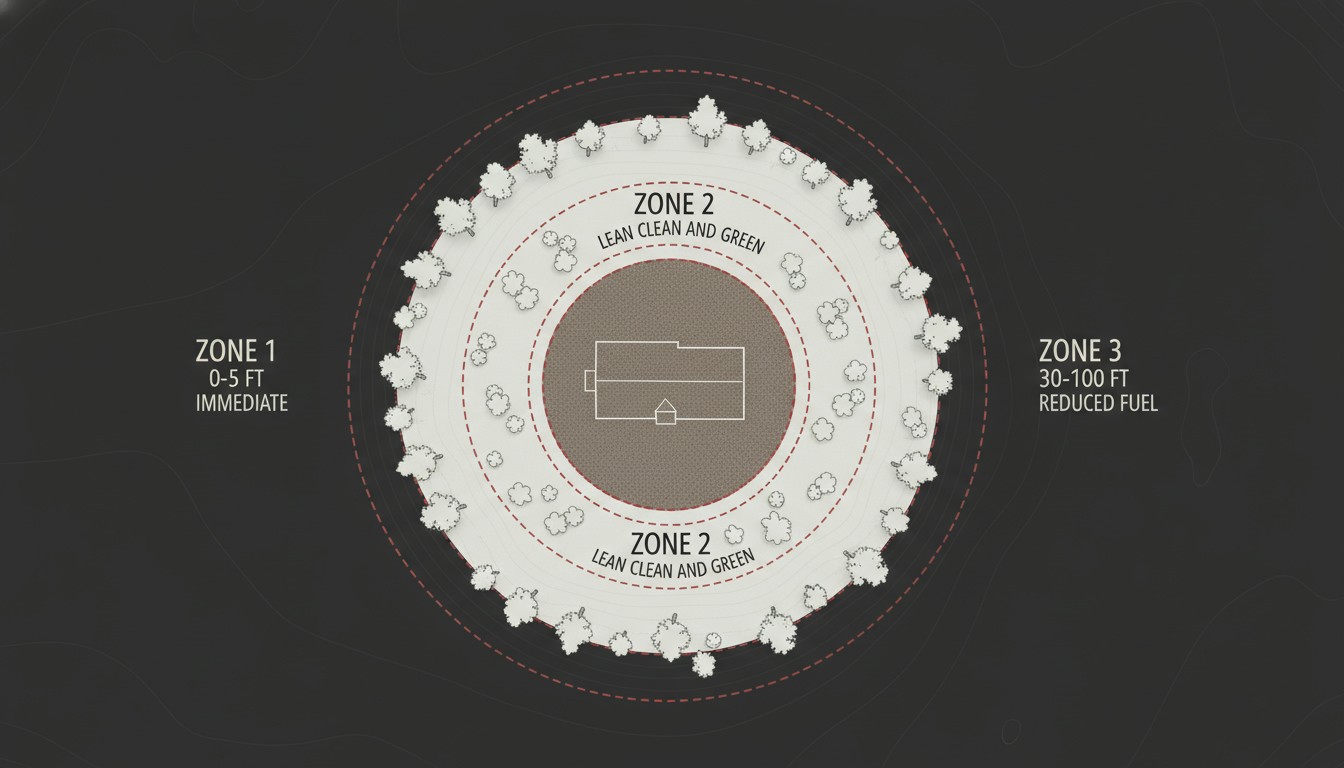
Three terms, one underlying job
Customers call asking for different things — "a firebreak," "defensible space," "fuel reduction," "fire prevention." In practice they're related parts of the same work. Defensible space is what you build close to a structure: the 0–5 ft, 5–30 ft, and 30–100 ft zones around a house, where the goal is keeping a ground fire from reaching the building. Firebreaks are cleared strips somewhere else on the property — fence lines, pasture edges, the gap between your woods and your neighbor's — built so a fire has trouble crossing. Fuel reduction is the broader category: anything that lowers the burnable load on a property. Most jobs we do involve some combination of all three, decided on the walk-through.
What we do
- Defensible-space clearing around homes, shops, barns, and well houses — out to the recommended 30 to 100-foot zones depending on slope and exposure.
- Property-line firebreaks — a cleared strip along the boundary that gives crews and equipment something to work with if a fire reaches your line.
- Driveway and access-road clearing — keeping evacuation routes and engine access wide and clear of overhanging brush.
- Ladder-fuel removal — brush, blackberry, and scotch broom growing under tree canopy that lets ground fire climb into the crowns.
- Pasture and field fuel-load reduction — knocking back tall, dry grass and brush across larger areas before peak summer.
What it typically costs in the Willamette Valley
Pricing varies with slope, density, and tree cover, but for typical Linn County rural properties in 2026:
- Defensible space around a single home (out to 30–100 ft): $1,800–$4,500
- Property-line firebreak, 200–600 ft: $1,200–$3,500
- Multi-acre fuel reduction (pastures, woods edges, ladder-fuel removal): $2,500–$8,000
- Yearly maintenance return cut (after the heavy first cut): typically 30–50% of the original cost
Stumps, debris haul-off, and grading aren't included — they're quoted separately so you can see what each piece costs. See full pricing for the rest of our services.
Oregon's wildfire hazard map and SB 762
Oregon's wildfire hazard map, mandated by Senate Bill 762, classifies properties into hazard tiers. Properties in the highest-hazard tier and inside the wildland-urban interface (WUI) have defensible-space obligations and potential building-code retrofits at the time of major construction or roof replacement. The map has been controversial and revised more than once, so check the current version on the Oregon Explorer wildfire risk site for your specific property's classification. Even if your property doesn't fall in the highest tier, insurance carriers in Oregon are increasingly asking about defensible-space work at renewal — getting ahead of it doesn't hurt.
What firebreak work doesn't do
A firebreak is not a guarantee. It's a margin. In a wind-driven event with embers flying half a mile ahead of the front, no amount of brush cutting stops the fire — but it slows the ground component, gives crews access, and gives a structure a fighting chance. We're honest about that. We do the dirt-work side of wildfire prep. You'll still want to do the rest of the homework — Firewise assessment, gutter cleaning, ember-resistant vents, an evacuation plan.
When to do it
Best window is late winter through early summer. Brush is still wet enough to cut clean and not throw sparks, the ground is firm enough for the skid steer, and the work is done before fire season opens. We can cut later in the year, but we watch ODF restrictions on industrial operations during high fire-danger windows — and so should you.
Pairs naturally with
Most firebreak jobs roll right into ongoing land management — once the heavy clearing is done, a return mow every spring keeps the cleared zones from filling back in. A lot of customers go from a one-time firebreak cut to a yearly maintenance call.
Authoritative sources we follow
We base our defensible-space recommendations on the same sources that ODF, Firewise, and OSU Extension teach from. If you want to read the source material yourself:
- Oregon Department of Forestry — fire restrictions & IFPL
- Firewise USA® — defensible-space program (NFPA)
- Oregon Explorer — wildfire risk and hazard map
- OSU Extension — Fire Program
Read more: defensible space in western Oregon — what ODF and your insurance actually require.
Related
Part of the bigger clearing job.
Where We Work
Firebreaks and fuel reduction in Lebanon and across Linn County.
We cut firebreaks and reduce wildfire fuel loads in Lebanon, Albany, Corvallis, Salem, Sweet Home, Brownsville, Jefferson, Scio, Tangent, Halsey, Harrisburg, and the rural acreage between them. See the full service area for distances.
- LebanonHome base · Linn County
- Albany~13 mi NW · Linn County
- Corvallis~25 mi W · Benton County
- Salem~30 mi N · Marion County
- Sweet Home~14 mi E · Linn County
- Brownsville~12 mi S · Linn County
- Jefferson~17 mi N · Marion County
- Scio~16 mi NE · Linn County
- Tangent~15 mi W · Linn County
- Halsey~18 mi SW · Linn County
- Harrisburg~25 mi SW · Linn County
FAQ
Common questions about firebreaks and fuel reduction.
How wide should a firebreak be?
Defensible-space recommendations are 0–5 ft (immediate, hardscape only), 5–30 ft (lean clean and green), 30–100 ft (reduced fuel). Property-line firebreaks are typically 10–30 ft wide. ODF and your local fire district have specific guidance for your area.
Will my insurance recognize this work?
Some carriers do. We can document the work with before/after photos and a written description for your underwriter. No guarantees on premium impact, but it's worth asking your agent.
Can you cut during fire season?
We watch ODF's industrial fire restrictions — during high or extreme fire danger, mechanical operations are restricted. We follow ODF rules and won't cut when the rating prohibits.
Is yearly maintenance worth it?
Yes. The first cut is the heavy lift; a return visit each spring keeps the cleared zones cleared without ever letting them grow back to "wall of brush" state. Most firebreak customers roll into our land management program.
What's the difference between firebreaks, defensible space, and fuel reduction?
They overlap in practice but aim at different scopes. Defensible space is the work close to a structure — the 0–5 ft, 5–30 ft, and 30–100 ft zones around a house. A firebreak is a cleared strip somewhere else on the property — typically along a fence line, road, or pasture edge — built so a fire has trouble crossing it. Fuel reduction is the broader category: anything that lowers the available burnable material. We do all three; what your property needs is decided on the walk-through.
What does firebreak or defensible space work cost in Oregon?
For a typical Linn County rural property in 2026: defensible space around a single home (30–100 ft zone) runs $1,800–$4,500 depending on slope, density, and tree cover. Property-line firebreaks run $1,200–$3,500. Multi-acre fuel-reduction jobs run $2,500–$8,000. Stumps, debris haul, and grading are quoted separately. Walk-throughs are free.
Does Oregon's wildfire hazard map (SB 762) require me to do anything?
Depends on your hazard tier. Oregon's wildfire hazard map (under SB 762) classifies properties into categories. Properties in the highest-hazard tier inside the wildland-urban interface have defensible-space obligations and may need building-code retrofits. The map has been politically contested and revised, so check the current version on Oregon Explorer for your property. Either way, defensible-space work is widely recommended on lower-hazard properties too — and increasingly asked about by insurance carriers at renewal.
Can you come out for an emergency cut during fire season?
Sometimes — depends on ODF's industrial fire precaution level (IFPL) and the specific weather window. During Level 3 or Level 4 days, mechanical operations are restricted or prohibited. We won't run the machine during a restriction, full stop — that's how fires start. If conditions allow and we have schedule, we'll fit emergency cuts in. Best move is to schedule in late winter or early spring instead of waiting for smoke on the horizon.
Want to be ready before August?
Firebreak walk-throughs are best in March and April. Call now to get on the schedule before fire season.