Ditches and culverts:
clear them first.
Iron & Earth Site Services · October 13, 2026 · 5 min read
The ditch and culvert beside your drive are the plumbing that takes winter rain off your property. When they fill with leaves, silt and grass, the water has to go somewhere else, and that somewhere is usually your driveway.
What they do
Your roadside ditch collects water from the road and the land around it and carries it away. Your driveway culvert is a pipe under the drive that lets that water pass beneath instead of over it. If either one stops working, water backs up, crosses the surface and washes it out.
Side view along the roadside ditch, left to right:
- Roadside ditchsteady fall toward the outlet; water flows left to right
- Drivewaycrosses over the pipe
- Culvert pipecarries ditch water under the drive to the other side
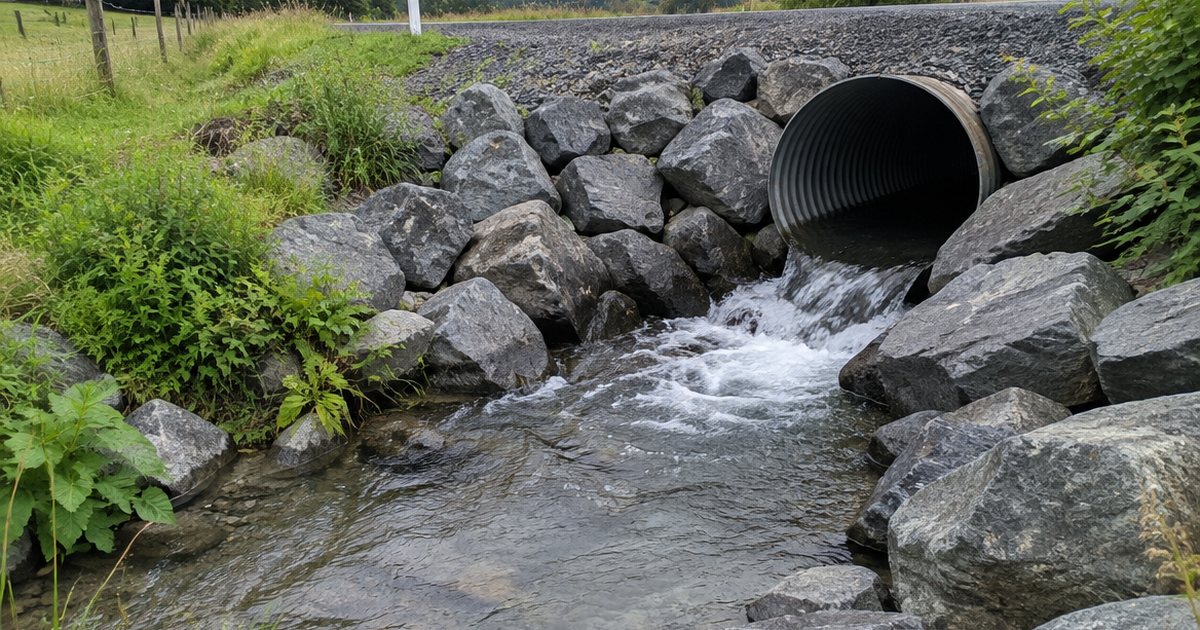
- Riprap at the outletstops the water digging a hole
- If silt and leaves plug the pipewater backs up and runs across the drive instead (red arrow)
Warning signs
- Standing water in the ditch days after rain.
- Water running across the drive at the entrance.
- A culvert that’s half-buried, crushed or visibly clogged.
- Erosion or a plunge hole where the pipe empties.
- Grass and brush growing in the bottom of the ditch.
What a cleanout involves
- Pull out the fill. Years of silt, leaves and grass come out with the mini excavator, and we haul it off.
- Reshape the ditch so water has a steady fall toward the outlet.
- Check the culvert. Clear it, and tell you honestly if it’s damaged, too small or set wrong.
- Protect the outlet. Where water leaves the pipe, rock (riprap) keeps it from digging a hole.
We do this as part of regular land management and drainage work. See the drainage service page.
Timing
The best time is before the heavy rains: early fall. But it’s also a job you can do in a dry stretch during winter, and the worst moment to find out your ditch is plugged is during a storm. Many customers make it an annual call.
Who owns what
A driveway culvert is often the property owner’s responsibility, while the ditch along a public road can sit in the county right-of-way, so changes to it may need the county’s okay. Work in or near streams can add permit and timing rules. If you’re unsure, ask us before we touch it and we’ll help you find who to call.
Where to go next
If the problem is bigger than a clogged ditch, read French drain, swale, ditch or culvert: which one do you need? For the driveway side, see why your driveway floods every winter.
Ditch or culvert plugged?
Send a photo of the ditch and the pipe outlet. We’ll tell you what it needs.