3/4 minus vs. 3/4 clean:
one word, two rocks.
Iron & Earth Site Services · October 13, 2026 · 5 min read
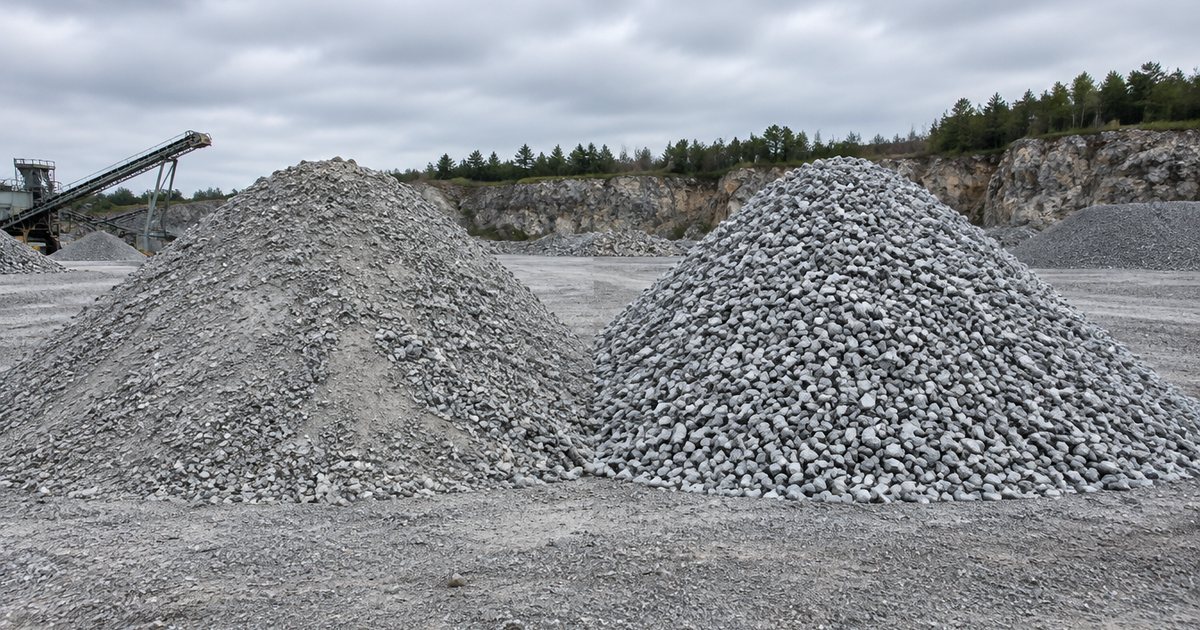
On the phone, both get called “three-quarter rock.” One makes a hard driveway. The other makes a loose, crunchy surface that shifts under tires and hooves. The difference is a single ingredient: dust.
The short version
- 3/4 minus has everything from dust up to 3/4”. The fines fill the gaps and bind it firm when compacted.
- 3/4 clean has the dust washed or screened out, leaving pieces close to 3/4”. Water passes straight through, and it never packs.
3/4 inch is a bit smaller than a US quarter, which is 0.955” across. Every size, compared to a quarter, is in our rock and gravel size guide.
Use 3/4 minus for
- Driveway top coats, over a coarser base.
- Shop, RV and equipment pads.
- Paver and patio bases, and walkways.
Use 3/4 clean for
- French drains and footing drains.
- Behind retaining walls.
- Septic drain fields (follow your designer’s rock spec).
- Decorative beds that should drain.
What happens when it’s the wrong one
Clean rock on a driveway or paddock: it stays loose, shifts, ruts and migrates, and it’s sharp and uncomfortable underfoot or under hooves. Minus rock in a French drain: the fines clog the voids, and the drain holds water instead of moving it.
This is the most common mix-up we see, and the easiest to prevent: say which one you mean, and have it written on the quote.
Other names you might hear
If you moved here from somewhere else, you may know these by other names. For example, #57 stone is clean stone, closest to our 3/4 clean. Crusher run and many state base-rock numbers are crushed rock with fines, which we call 3/4 minus or road base. Our guide has a translation key.
How to order it right
- What it’s for: driveway, pad, drain, path, paddock.
- The size and “minus” or “clean”, for example “3/4 minus.”
- Depth and area, so we can figure the tons. Our calculator does it for you.
Not sure which rock?
Tell us what it’s for. We’ll name the right rock and put it in writing.