Pond construction in Oregon —
what needs a permit, what doesn't.
By Jeff Walters · April 28, 2026 · 8 min read
Oregon's pond rules confuse a lot of property owners — and for good reason. The state has some of the strictest water-rights laws in the country, but the permit thresholds for small residential ponds are actually pretty reasonable. Here's the practical guide: what you can build without paperwork, what triggers a permit, and how to design a pond that stays legal from day one.
Disclaimer: this is a practical guide based on what we see in the field, not legal advice. Always confirm your specific situation with the Oregon Water Resources Department (OWRD) and your county before starting. Rules change. We're not lawyers.
Why Oregon regulates ponds at all
Oregon water law operates on the principle of prior appropriation — water belongs to the public, and the right to use it is granted via permit, not owned with the land. This is fundamentally different from how most eastern states work. The practical effect: when you collect, store, or divert water on your property, you're potentially affecting downstream users who already have water rights.
OWRD (Oregon Water Resources Department) is the state agency that issues water rights and regulates water use. Pond construction sits squarely in their wheelhouse because a pond is, by definition, water storage.
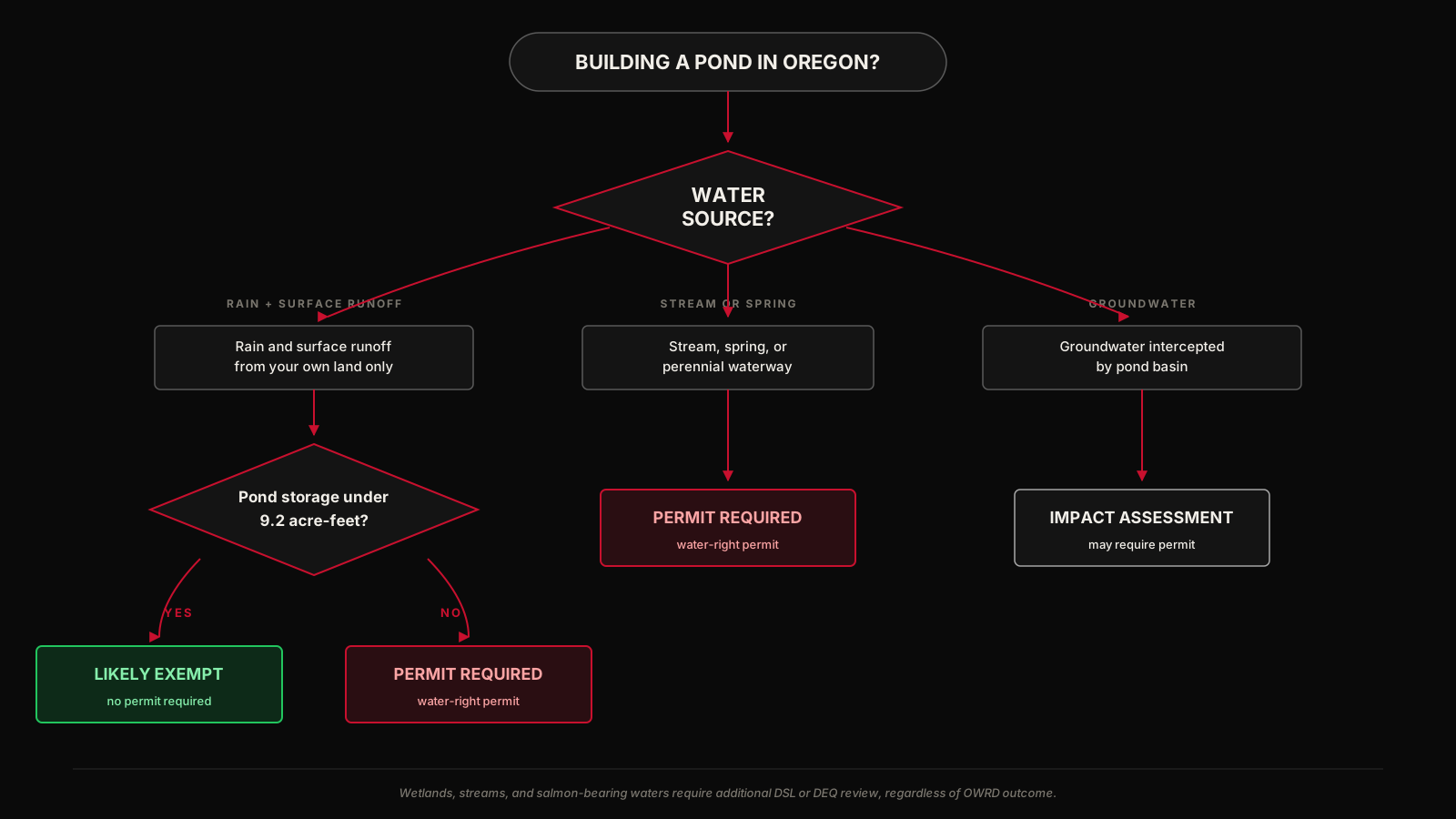
The general rule: where the water comes from matters
The single biggest factor in whether your pond needs a permit is where the water comes from. Specifically:
Stored rainwater and surface runoff
Most upland ponds — fed only by precipitation falling on your property and surface runoff from your own land — are exempt from water-right permit requirements up to certain size limits. This is the legal pathway for most small farm ponds and decorative ponds in the Willamette Valley.
Stream-fed or spring-fed ponds
Any pond that diverts water from a flowing stream, intermittent waterway, or spring requires a water-right permit. No exemption. The state treats this as appropriating water that has downstream beneficiaries.
Groundwater-fed ponds
If your pond intercepts groundwater (i.e., the water table is high enough that the pond fills from below), it gets evaluated similarly to a stream-fed pond. There may be permit requirements depending on impact assessment.
The size thresholds
For ponds collecting only surface runoff and rainwater on your property, OWRD has historically used these thresholds (subject to change — confirm current rules):
- Under 9.2 acre-feet of storage (roughly equivalent to a small farm pond, depending on depth): generally exempt from water-right permit if water source qualifies.
- Over 9.2 acre-feet of storage: water-right permit required regardless of source.
An "acre-foot" is the volume of water covering one acre at one foot deep. Most residential ponds — say, ¼ acre surface area at 8 feet depth — work out to roughly 2 acre-feet. Well under the threshold.
What about wetlands and waterways?
This is where it gets more complicated. Even if your pond is exempt from OWRD water-right permitting, you may need other permits if construction affects:
- Wetlands (regulated by Oregon Department of State Lands).
- Streams or perennial waterways (Oregon DSL and possibly the Army Corps of Engineers under the federal Clean Water Act).
- Riparian areas on certain forest land (Oregon Department of Forestry).
- Salmon-bearing streams (Oregon Department of Fish and Wildlife review).
The simple rule: if your planned pond is within 100 feet of any flowing water, wetland, or seasonal waterway, get pre-construction sign-off from DSL before digging. They have a quick "wetland delineation" process that tells you whether you have wetlands and what permits apply.
County and local rules
On top of state rules, your county and any local jurisdiction may have:
- Building permit requirements for impoundment structures (dams, embankments) above certain heights.
- Zoning rules about where ponds can be sited on a property.
- Setback requirements from property lines, septic systems, and wells.
- Erosion control plan requirements during construction.
For Linn County properties, a quick call to the planning department before digging is the easy way to confirm. Most small upland ponds are fine without a county permit, but knowing for sure costs nothing.
The practical situation for typical valley ponds
Here's how it usually plays out in the mid-Willamette Valley for a property owner wanting a small farm or decorative pond:
"Yes, you can probably build it without a permit" if:
- The pond is on your own property, well away from any stream, wetland, or seasonal waterway (100+ feet).
- The pond is fed only by rainfall and surface runoff from your land.
- The pond is under 9.2 acre-feet of storage (most residential ponds).
- The pond has no significant impoundment dam (no high-hazard structure).
- You're not affecting any neighbor's water access.
"You'll need permits" if:
- The pond is fed by a stream, spring, or perennial water source.
- The pond is near a wetland, waterway, or salmon-bearing stream.
- The pond is large enough to require a dam or significant impoundment.
- You're building on forested land subject to Forest Practices Act rules.
- The county has specific local rules (usually for setbacks, sometimes for size).
How to design a pond that stays legal
If you're building a small upland pond and want to keep it permit-exempt, design with these principles:
- Site away from waterways and wetlands. The 100-foot buffer is informal but very useful.
- Keep total storage well under 9.2 acre-feet. Most residential ponds are easily inside this.
- Rely on rainfall and surface runoff only. No diverting from streams, no intercepting springs.
- Build modest impoundment. Excavated ponds (dug into native ground) are simpler than dammed ponds.
- Plan an overflow / spillway. Excess water needs somewhere to go that doesn't damage downstream property.
- Document the source. Keep notes and photos showing the pond is rain-fed, in case anyone asks later.
What pond construction actually involves
The dirt-work side of a small upland pond:
- Site selection. Soil, slope, drainage, distance from buildings, access for equipment. Many pond sites need brush and vegetation cleared before excavation can begin — overgrown blackberry or thick undergrowth on a potential pond site is common and normal.
- Soil testing. Some valley soils hold water naturally; others need a clay seal or liner. Heavy clay = good. Sandy or gravelly = lined.
- Permits and pre-construction. Whatever permits apply, sourced before digging.
- Excavation. Strip topsoil. Dig the basin to the design shape. Battering the sides for stability.
- Compaction and lining. Where soil holds water, just compact. Where it doesn't, add a clay layer or synthetic liner.
- Spillway / overflow. Build the overflow structure that handles excess water during storms.
- Inlet (if any). Where surface runoff enters, build erosion-control inlet structure.
- Edge work. Shape edges for safety, aesthetics, and habitat. Plant if desired.
Typical timeline: 2–5 days for a small farm pond, longer for ponds with complex inlet/outlet structure.
What it costs
Real numbers for typical mid-Willamette Valley small ponds in 2026:
- Small decorative pond (¼ acre, 4–6 ft depth): $4,000–$8,000 for excavation, with additional cost for liner if soil requires.
- Small farm pond (¼–½ acre, 8–10 ft depth): $6,000–$15,000 depending on size and soil.
- Liner installation (for sandy / gravelly soils): $1.50–$3 per square foot of pond surface.
- Permits and pre-construction: typically $200–$1,500 in fees if needed, more if a delineation is required.
Common pond mistakes
- Building without checking water source rules. A pond fed by an unnoticed seasonal waterway can become a permit problem after the fact.
- Skipping soil testing. Building a pond in sandy ground without a liner means watching the water leave for the next decade.
- No overflow structure. First big storm overtops the pond, erodes the embankment, drains the whole thing.
- Building too close to the house or septic. Setbacks matter — both for code and for practical reasons (water table, foundation moisture).
The bottom line
Building a small upland pond on your own property in Oregon is generally allowed without permits, as long as you stick to surface runoff and stay under volume thresholds. The trouble starts when you're near waterways, when the pond is large, or when the water source is a stream or spring. The cost of asking before you dig — calling OWRD, calling the county, calling DSL if there's any waterway nearby — is zero. The cost of building first and asking second can be substantial.
If you're planning a pond on Linn County or mid-Willamette Valley acreage, see our pond construction service page, or call. We walk the property, talk through soil and source, and tell you straight whether you've got a permit-exempt situation or whether OWRD/DSL conversations need to happen first.
Related
More from the job site.
Pond Construction Service
The service page version. Pricing, process, FAQs.
Service detailsDrainage Solutions Guide
How drainage and ponds interact on a property.
ReadLand Clearing
Most pond sites need clearing before the excavator can dig — brush, blackberry, and overgrowth removed first.
Service detailsWant a pond?
Tell us about the spot and we'll walk it. Soil, source, slope, setbacks — the four things that determine whether it works.